Key Takeaways
Your phone rings when people can find you, trust you, and reach you fast. These ten plumber digital marketing tips start with the fastest wins and move into the slower, relationship-based work that keeps jobs coming once the fast wins are in place.
- Optimize your Google Business Profile to capture local search traffic immediately.
- Keep your website mobile-friendly so visitors turn into callers instead of bouncing.
- Ask every happy customer for a review to build the trust that gets you hired.
- Run locally targeted ads to land the top spots on search results.
- Stay in touch with past customers through simple, direct email.
1. Get your Google Business Profile set right
Your Google Business Profile is the front door for your trade business. Most homeowners search for plumbing help through a map result, so if your profile is missing updated hours, a local address, or clear service descriptions, you lose those leads to competitors who have their listing in order. Upload recent photos of your work and make sure your contact details match exactly across every place you show up online.
A complete profile signals trust to Google. Keep it current and you improve your odds of moving from outside the top 10 to the top 3 on Google Maps. We see shops lose local calls every week simply because they left their business information outdated or blank. Update your profile whenever your hours change or you add a new service area.
If you’re not sure why you aren’t showing up where you should, a quick look under the hood usually explains it. You can check your standing with AI SEO Local using a free profile audit to see which specific issues are costing you visibility. Consistency in your NAP (name, address, and phone number) is the bedrock of local performance. Treat your profile like your most valuable digital asset and you’ll see it in your call volume.
2. Build a no-nonsense website that works on phones
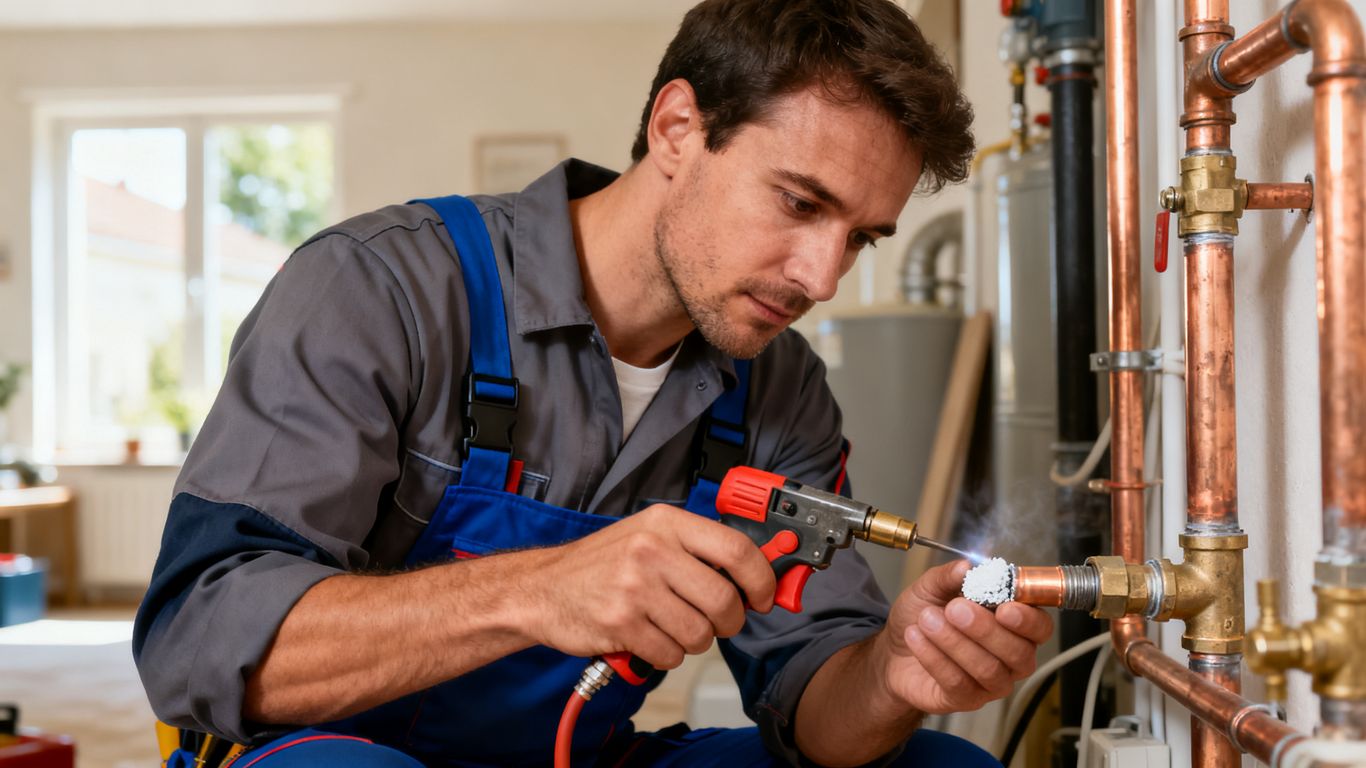
Most homeowners call a plumber from their phones when a crisis hits, like a burst pipe or a backed-up sink. If your website takes five seconds to load or looks broken on a phone screen, that homeowner is gone before you even know they visited. Build a site that works reliably and shows your services clearly, without extra fluff or slow-loading graphics.
A simple site puts your phone number and a “Book Now” button front and center. Skip complicated menus that make people hunt for your contact details. Fast and mobile-friendly is the baseline now, not a bonus, for any plumbing business online.
Keep your site content focused on the homeowner, not a long company history. Give them enough to trust you, then make it easy to reach out. A simple pricing breakdown or a short FAQ section for common, low-stakes questions helps set expectations and takes friction out of booking.
3. Ask every happy customer for a review
Social proof drives new business in this trade. When a customer has a great experience, ask for a review right after you finish the job. Wait until you’re back at the shop and the urgency fades, and so does your chance of getting it. A steady stream of real, local reviews helps you stand out in the map pack and shows potential clients you’re someone they can welcome into their home.
Some owners feel awkward asking for feedback, but happy customers usually want to support a local business. Make it part of your post-service routine, the same as packing up your tools. Send a direct link to your review page so there’s nothing for them to search for.
A trusted local reputation doesn’t build overnight, but it adds up. As you collect more reviews, new customers will tell you they saw them before calling. Keep the ask genuine and keep doing it on every job.
4. Run Local Services ads to show up at the top
Local Services ads can put your company at the very top of Google for high-intent searches. These ads require verification, which adds a layer of trust customers notice. When you pay for these leads, you’re paying for a verified, professional conversation with someone who needs help right now.
| Budget Level | Typical Lead Focus | Expected Goal |
|---|---|---|
| Conservative | Residential Leak Repairs | Call Volume Only |
| Mid-Range | Routine Maintenance | Booked Appointments |
| Aggressive | Big Bathroom Renovations | High-Value Projects |
Manage these budgets carefully so your phone time is worth the spend. Track your calls and you can pause campaigns that only bring in small, unprofitable jobs, and put more into the ones driving real revenue. Plenty of businesses skip this kind of tracking and pay for it later.
If your ads aren’t performing, check your service categories first. Too broad or too narrow can both choke your ad delivery. Adjusting your location settings and hours can also help you reach the neighborhoods worth the most to your bottom line.
5. Keep your social media real, not corporate
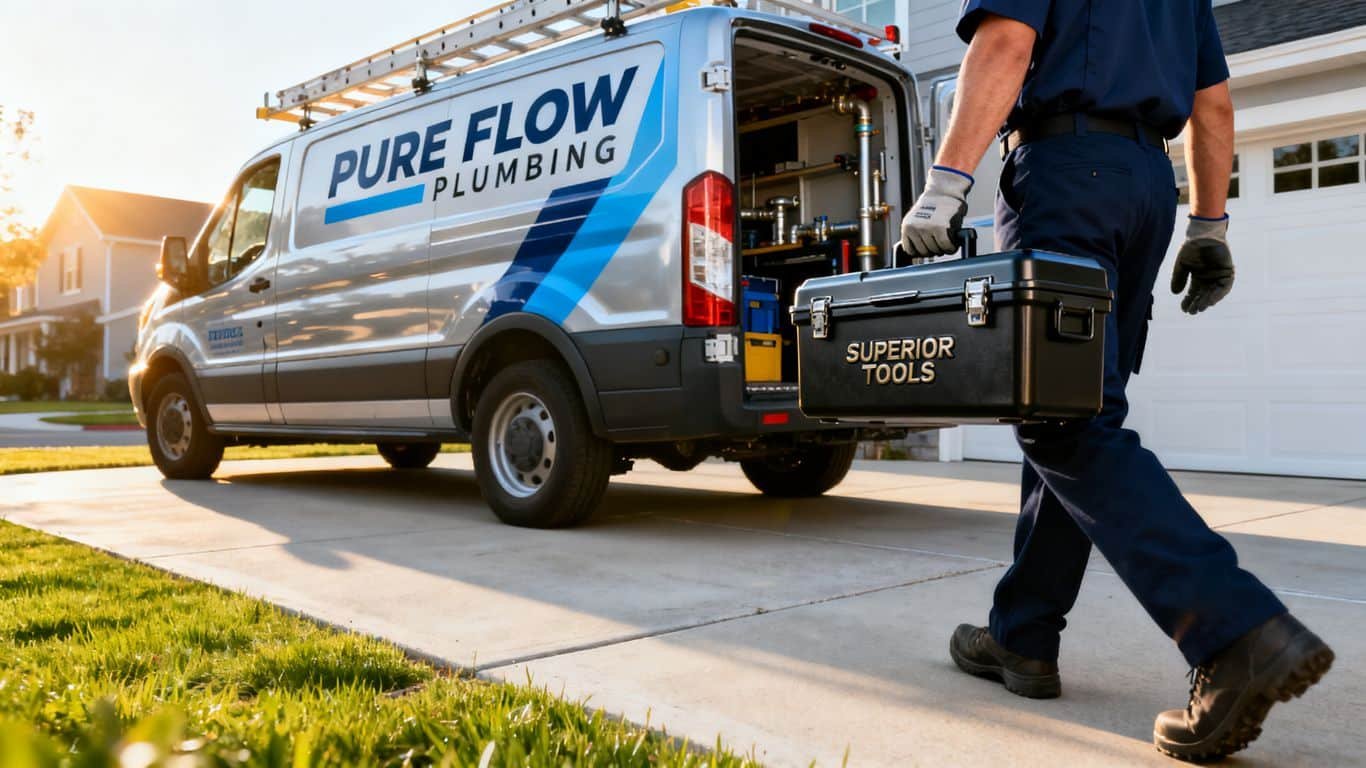
Social media for a plumber shouldn’t look like a stock photo catalog. Homeowners want to see the person who’ll be under their kitchen sink, not a staged smile in a polished ad. Post pictures of your team, real jobs you’re working on, maybe the odd strange thing you found in a drain. People connect with that in a way a corporate page can’t fake.
Don’t chase follower counts or viral trends. Focus on being useful to your community. A short video on how to shut off a main valve in an emergency gives people something real while showing what you know. That’s what makes you the local go-to instead of just another name in a search.
Being the helpful, reliable neighbor does more for your local reputation than trying to match the polished marketing of a big, impersonal franchise.
Your feed works like a second gut check for anyone considering you. When a potential customer looks you up, they want to see that you’re active, that you have a van out working, and that you take pride in the job. Keep it real and social media becomes a steady, low-stress part of your marketing.
6. Use local SEO to dominate your service area
Local SEO proves to Google that you’re a real business working in specific zip codes, not just claiming a service area on paper. Make sure your business name, address, and phone number are exactly the same everywhere online, on your website, your profile, and every directory that lists you. That consistency matters more for local ranking than any keyword trick.
We often see local businesses lose potential jobs because they never build a real local strategy. Focus on neighborhood-level search terms instead of city-wide or regional ones. Optimizing for the actual streets you serve captures the searches that turn into jobs you can drive to easily.
Run a free audit to see how your business stacks up against your neighbors. Tools from AI SEO Local can show you exactly where you’re losing ground in the map pack without hiring a full-time marketing director. Local SEO is the long game that keeps your name the first one people see when they need help in their neighborhood.
7. Send simple email reminders to past customers
Most homeowners forget who they hired for their last plumbing repair by the time the next issue shows up. You already paid to win that customer, so ignoring them for years wastes the work you put in. A simple email every six months, maybe about seasonal checkups or winterizing pipes, keeps your name in front of them.
You don’t need corporate automation to pull this off. Keep a list of past jobs and send a personal note or a short update that offers something useful along with your contact info. It’s a quick heads-up that can save them a plumbing headache later.
These reminders also give customers a natural opening to leave the review they meant to write. If you’re losing engagement, check whether you’re losing people in the first 60 seconds after they call. A system that handles your follow-ups automatically keeps leads from slipping through, whether they’re brand-new callers or customers from three years back.
8. Answer customer questions before they call
When someone has a plumbing problem, they often search for the answer before they search for a plumber. A simple blog post or a short video that answers a real question, like how to tell if a water heater is failing or why a toilet keeps running, puts you in front of that search. It also proves you know your trade before you ever pick up the phone.
You don’t need a studio or a script. Film a two-minute clip on your phone after a job, walking through the same explanation you’d give a customer standing in their kitchen. Post it on your site and share it wherever you already post. Nobody needs to go viral for this to work. It just needs to make you the plumber people already trust by the time they call.
Keep a running list of the questions customers ask you on the job. That list is your entire content plan. Answer one a month and you’ll build a stack of pages and videos that keep working long after you post them.
9. Track your incoming calls to kill ads that don’t pay
If you don’t know which campaigns are actually driving your bookings, you’re likely wasting money on dead ends. Call tracking shows you which ads, search terms, or referral sources are putting money in your bank account. If one ad costs you $400 for a stray wrong number and another brings in multiple jobs for the same spend, the choice is obvious.
Many agencies promise you volume, but you need to pay for results, not activity. This is also where you can stop renting every lead from places like Angi and start building something that sends you jobs directly, on your terms. A tool like AI SEO Local can flag missed calls, because ~85% of callers who reach voicemail never call back.
Focus on the quality of the interaction, not just the count of calls. If you’re not flagging missed opportunities, you’re paying for leads you never actually got the chance to serve. Keep the ads that convert and cut the rest without hesitation.
10. Partner with local home builders for steady leads
Building real relationships with local contractors or real estate developers creates work that doesn’t depend on search clicks or ad spend. Offer dependable service to builders who need a plumbing sub that shows up on time and does clean work. They get reliability, you get steady, higher-ticket jobs.
These relationships take time, but they run on the same thing every good customer relationship runs on: showing up and doing the job right. Go to hardware supply house events or join local business groups and introduce yourself. Start with the smaller jobs other subs don’t want, and let bigger contracts follow once you’ve proven yourself.
Steady anchor clients help you ride out slow seasons even when digital trends shift. Paired with a solid online presence, these partnerships give you a business that isn’t only dependent on search rankings. Keep showing up, keep the work clean, and you’ll be the first call when the next project starts.
Conclusion
None of this requires new technology or a marketing degree. It means being easy to find and quick to answer when someone needs a plumber today. Get your Google profile right, keep your site fast, and follow up on every call, and you’ll already be ahead of most competitors who never bother to clean this up. Do good work and stay visible where people already look. Your reviews and past customers will carry the rest.
Frequently Asked Questions
Why does my Google Business Profile not show up in the map pack?
If you aren’t ranking, your profile might be incomplete, your NAP details could be inconsistent across the web, or you simply lack enough local reviews to compete in your specific town.
How fast does a new website need to load for plumbing customers?
Because most of your customers are in urgent situations and using mobile devices, your site should ideally load within two seconds to prevent people from clicking away to a competitor.
Is it worth paying for ads if I have a strong search ranking?
Even with a high organic ranking, ads help you occupy more space on the screen and give you more control over the specific keywords you want to target during slow periods.
How often should I ask for a customer review?
You should aim to confirm that the customer is happy with the work and ask for a review immediately after every single job to keep the momentum going.
Does social media marketing actually drive bookings?
While social media isn’t always the primary driver for a one-off plumbing call, it serves as a critical verification step that builds the trust required for a new customer to hire you.
What should I do if I cannot afford a full-time marketing agency?
Start by mastering your local listings and ensuring your phone is answered every time, as these fundamental steps often generate more immediate value than expensive, outsourced ad campaigns.
How do I know if my call tracking is working correctly?
Effective call tracking will show you the exact source and performance of every inquiry, allowing you to clearly distinguish between high-value conversations and dead-end noise.
How long before local SEO actually pays off?
Local SEO is not a light switch. Small, consistent improvements to your profile and site tend to show up in call volume over weeks and months, not overnight, and they keep paying off long after you stop actively working on them. If you need calls today, pair it with Local Services ads while the slower work builds underneath.
Want to know exactly where your Google Business Profile is losing you calls? Get a free, no-obligation GBP audit.
References
- Industry missed-call research, compiled with sources linked. Missed-call statistics