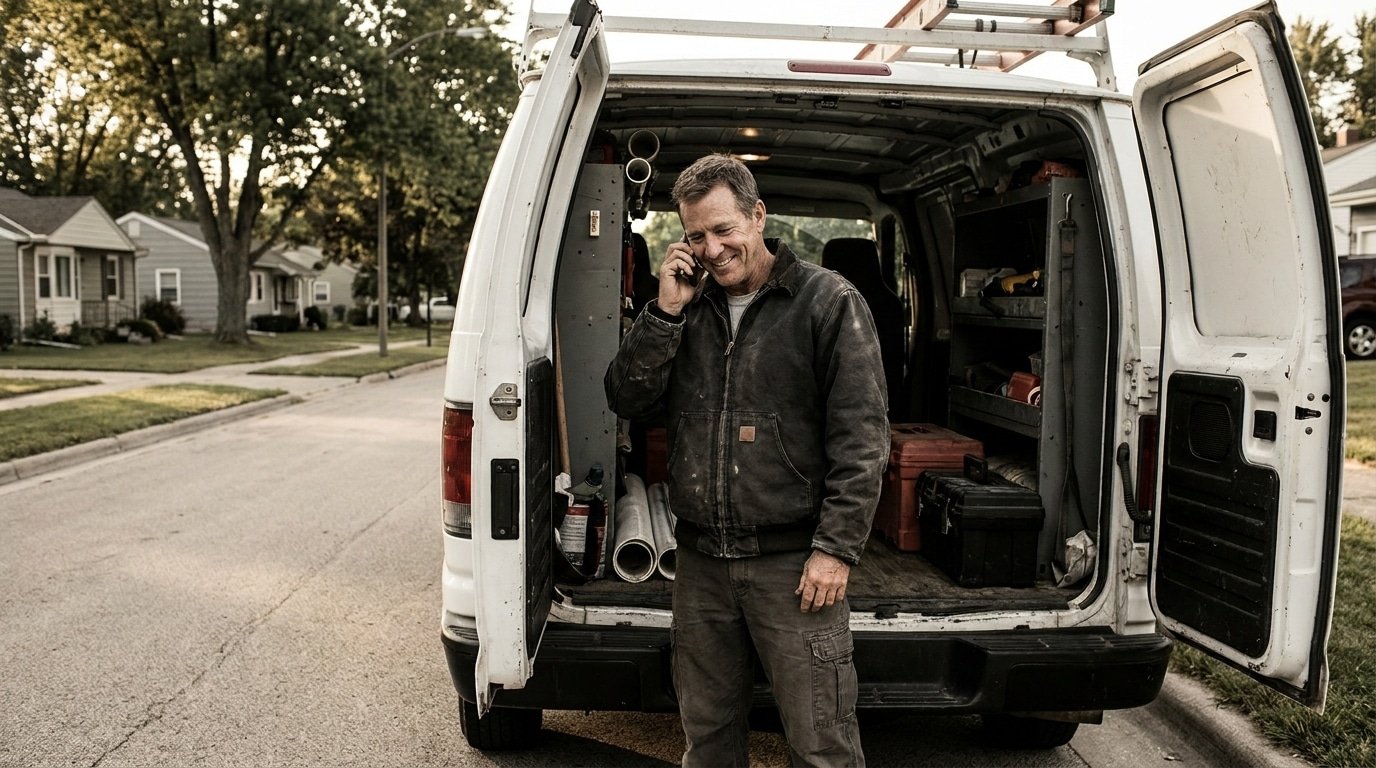
Local SEO for plumbers is not a glossy marketing project. It is keeping the phone from going dead while you are elbow deep under a cabinet, then making sure nearby homeowners can find you when the water heater quits or a drain backs up. If you run one to three vans, have hired a couple of agencies already, and are now saying “my phone stopped ringing,” you are not alone. You are probably not short on effort. You have leaks in how calls get captured and in how Google Maps sees your business.
A plumber does not need another report full of talk. You need a straight answer: what happens to the customer who calls at 10:17 while you are on a job, and why is a nearby search putting another shop ahead of yours? Fix those two things, in that order.
Local SEO for plumbers starts with the call you missed
A missed plumbing call is not a casual inquiry. It might be a homeowner staring at water on the floor, a landlord with an angry tenant, or a restaurant manager who needs a drain cleared before the dinner rush. These people do not leave five messages and wait around. They call the next number on the list.
That is why the 60-second missed-call window matters so much. It is the first minute after a live call goes unanswered. A short, automatic message such as “Sorry we missed your call. We’re on a job right now. What’s the plumbing issue, and what ZIP code are you in?” tells the caller they reached a real business and buys you time to take over as soon as you safely can.
Published call-handling benchmarks commonly report that roughly 85% of people who reach voicemail do not make a second call to the same business.[1] Lead-response roundups also commonly cite that about 78% of buyers choose the first company that responds.[2] Those are benchmarks, not promises about your shop, but they match what plumbers see every week: the next truck is one tap away.
A 60-second text-back is not magic, and it is not a booked-job guarantee. With a clear message and a properly set-up number, an instant SMS can keep roughly 35-50% of missed callers engaged in a reply or a conversation, depending on the market, the timing, and the quality of the message.[3] The number that matters is whether a real conversation starts, not whether some software takes credit for a job it never actually booked.
Most owners get this fast: three missed calls a day at $400 a call adds up in a hurry. That does not mean every caller turns into a paid job. It means you are already paying to be found, and then losing the lead anyway because nobody answered or replied.
Before you spend another day arguing about Google Maps, make sure every missed call gets a fast, honest first reply. Our plain-English explanation of missed-call text-back for service businesses covers what the workflow should and should not do. It should acknowledge the caller, gather the basics, and hand the conversation to a human. It should never sound like a robot trying to sell pipe work.
The Google Maps audit: find the leak before you try to rank
Once the call leak is plugged, look at the map result that produced the call in the first place. Google says local results are based mainly on relevance, distance, and prominence.[4] That means a plumbing shop cannot just copy a generic website, list every city in the state, and expect to show up across an entire metro area. Your profile has to match the work you actually do, the places you actually serve, and the proof customers can see.
You will hear the phrase outside the top 10 to the top 3 on Google Maps thrown around a lot. Treat it as a direction for the work, not a ranking guarantee. No honest agency can promise a specific position. A proper audit checks where you appear for the services that matter, from the neighborhoods you actually want to cover, and finds the gaps holding you back.
| Audit checkpoint | What usually goes wrong at a plumbing shop | What a useful fix looks like |
|---|---|---|
| Google Business Profile | The primary category is vague, services are thin, or the contact details are stale. | Make the profile match the core work you want to be called for and keep the phone, hours, and service area accurate. |
| Emergency-call handling | The listing says you are open, but callers reach voicemail with no fast reply. | Match the listed hours to reality and route missed calls into the 60-second text-back workflow. |
| Job proof | The profile has generic stock photos or photos from years ago. | Add real, permission-safe photos of vans, crews, drain work, water-heater installs, and finished jobs. |
| Reviews | Reviews are sparse, stale, or unanswered. | Build a simple post-job review request process and reply like a local owner, not a script. |
| Service coverage | The shop claims places where it does not dispatch promptly. | Keep the service area honest and build useful pages around real service areas and real plumbing work. |
The full Google Business Profile audit checklist is useful here because it forces the conversation away from vague monthly activity and onto the information a homeowner actually sees before they dial. If your business name, phone number, hours, categories, reviews, and services are not tight, spending more effort elsewhere will not fix the basic problem.
Show up for the job, not just the ZIP code
A homeowner searching “water heater repair” and one searching “drain cleaning” are not looking for the same thing, even if both end up calling a plumber. A single, generic “plumbing services” page cannot speak to either of them well. A page built around the water heater job, with real photos and plain language about that specific problem, gives Google and the homeowner a clear match for what they searched.
Most plumbing shops run out of vans, not a storefront, which means the work happens across a service area rather than at one address. Google lets a service-area business hide its address and list a service area instead, and that is the right setup for a van-based shop. What Google will not tolerate, and what will burn your trust with customers, is claiming you cover a town you cannot actually reach and dispatch to in a reasonable time. Build pages for the real jobs you do in the towns you actually serve, and leave it there.
Why agencies keep burning plumbing operators
The burned-operator story is usually the same. The agency sold a big plan. They sent reports every month. Nobody could say which calls were answered, which went to voicemail, which jobs came from the map, or why the shop showed up in one part of town but not another. When you asked a direct question, you got a word salad back.
That is not a plumbing-business problem. It is an accountability problem. A local shop has dispatch gaps, service areas, seasonal demand, emergency work, techs driving between jobs, and a phone that can ring while everyone has wet hands. A marketing plan that ignores those realities is built for a boardroom, not a service van.
Watch for these warning signs in your current setup: the profile is owned by someone else, access is unclear, the agency cannot show where missed calls go, the service list reads like generic construction copy, or your reviews get treated as an afterthought. None of that requires a secret trick. It requires someone doing the boring work correctly and letting you see what is changing.
A useful partner should be able to explain the plan standing on a job site. Stop losing the calls already coming in. Clean up the Google Maps signals. Add real proof that you do the plumbing work people are searching for. Track whether conversations are actually reaching your team. That passes the plumber-in-ten-seconds test.
What a practical local SEO system looks like for a plumbing shop
For a small plumbing company, the system needs to be simple enough to survive a busy week. Your techs do not need to become marketers. You need a process that fits the way your workday already runs.
Your missed-call response needs a real owner first. If a call is missed, the text goes out right away, the caller can reply with the issue and ZIP code, and someone knows who takes the next step. That could be you, office help, or an on-call dispatcher. The point is that the customer is never left wondering if their message disappeared into nothing.
Your Google Business Profile should show the plumbing work you want more of. If drain cleaning, water heaters, sewer issues, leak detection, and emergency repairs are your bread and butter, the profile, the job photos, the review language, and the supporting pages all need to say so. The plumber Google Maps ranking guide walks through how to check those pieces without pretending you can show up everywhere overnight.
Ask for reviews after the work is done and the customer is relieved. A short, plain request works better than a canned speech. Don’t pressure people or promise anything in exchange for a review. Just make it easy for a satisfied customer to describe the job you actually did. For a plumber, reviews that mention a drain cleared, a leak fixed, a punctual arrival, or a clean work area give future callers something real to go on.
Measure the handoff, not just the activity. Count missed calls, text replies, returned calls, scheduled estimates, and completed jobs in a way your shop can actually use. That tells you whether the 60-second text-back is creating conversations and whether your map presence is bringing in the kind of work you actually want. A lead recovery workflow for local service shops can connect those steps without turning your business into a software project.
FAQ: local SEO for plumbing shops
Does local SEO for a plumber start with a new website? Not always. Start by checking whether your Google Business Profile is accurate, whether your service pages explain the work you actually do, and whether missed callers get a fast reply. A website rebuild can help in some cases, but it will not fix an unanswered phone by itself.
How fast should a missed-call text go out? Aim for the 60-second missed-call window. The first message should arrive quickly, be clear about who is texting, and invite the caller to share the plumbing problem and ZIP code. A human should take over as soon as practical.
Can a plumber rank across an entire metro area? Local Maps results are shaped by relevance, distance, and prominence.[4] Results can vary block by block and neighborhood by neighborhood. A sound strategy focuses on the places you truly serve rather than promising every suburb at once.
How do I show up in nearby towns where I don’t have a shop? Set your service area honestly in your Google Business Profile and build pages for the real jobs you handle in those towns. Don’t claim coverage you can’t actually deliver on. A van-based plumber does not need a storefront in every town to be found there, just an honest listing and dispatch times that back it up.
Do Google reviews matter for a plumbing shop? Reviews give homeowners a quick way to judge whether you show up, communicate, and solve the kind of problem they have. They are also part of the local proof Google weighs when assessing a business. Keep the process honest, steady, and tied to completed work.
What should I look at every week? Missed calls, the speed of the first reply, text conversations, returned calls, booked estimates, completed jobs, new reviews, and whether your profile details still match your actual hours and service area. Those are numbers a working plumbing shop can act on.
Stop guessing where the calls went
If you are tired of hearing that marketing is working while the phone stays quiet, start with an honest look at the calls you missed and the map result that brought them in. Request a Google Maps and missed-call audit/demo to see the weak spots before you spend another dollar on the wrong fix.
Want to know exactly where your Google Business Profile is losing you calls? Get a free, no-obligation GBP audit.