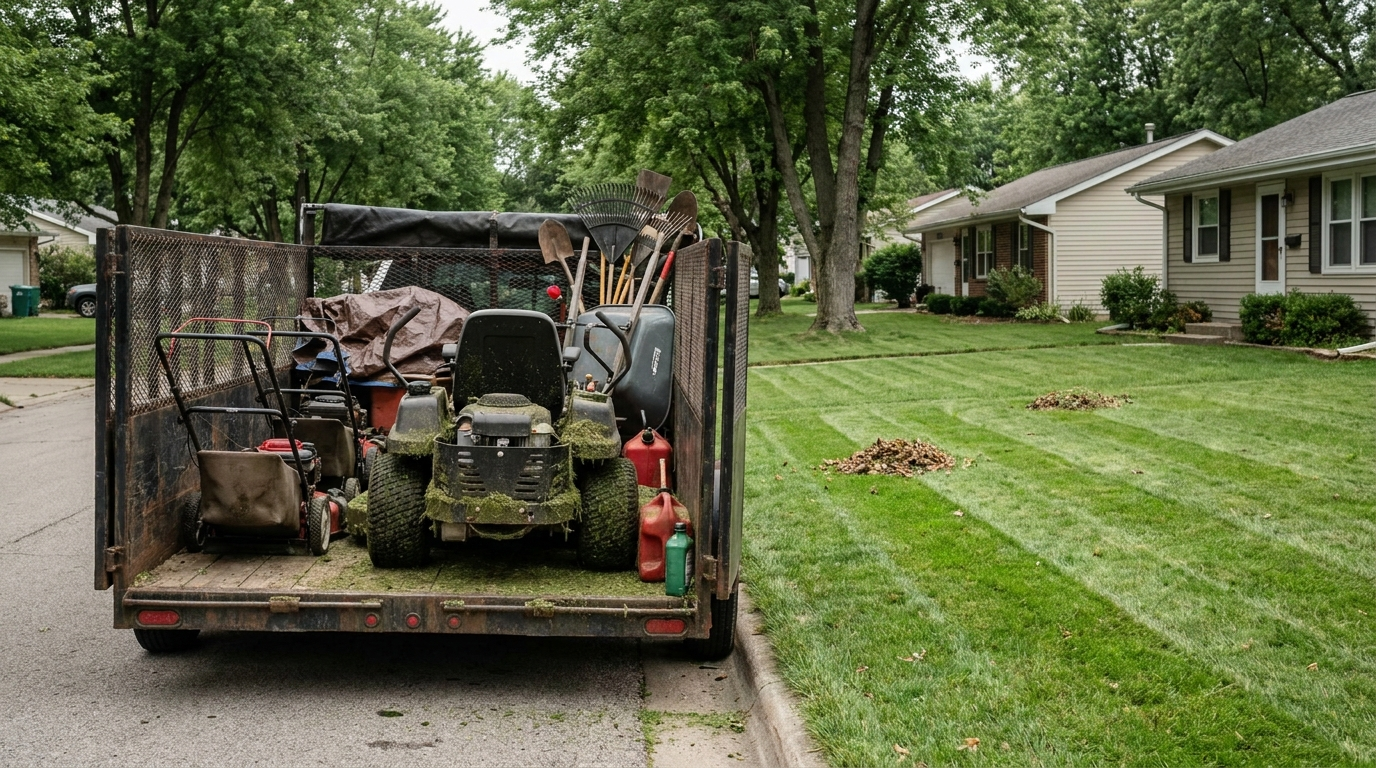
Getting found on Google as a landscaper comes down to a fundamental choice about your business model. A fifty-thousand-dollar outdoor kitchen build and a fifty-dollar weekly mowing route are two entirely different searches. When we map out SEO for landscapers, the first step is deciding which of those two customers you actually want to attract.
Ranking for everything at once is a fast way to burn your budget and get nowhere. You have to tailor your digital presence to the specific type of work that drives your revenue.
The Two Different Games in Landscaping SEO
If you run a landscape design-and-build firm, your ideal customer is doing heavy research. They are typing phrases like “custom patio builders” or “retaining wall installation.” They want to see photos, read reviews, and understand your process before they hand over a massive deposit. They are looking for authority and trust.
Maintenance is a completely different animal. A homeowner looking for lawn mowing or fall cleanups is making a fast, proximity-based decision. They search “lawn care near me,” look at the map at the top of Google, and call the first company with decent reviews. They just want someone reliable who is already working in their neighborhood.
Your website and your local search strategy have to match the game you are playing. If you want high-ticket installs, you need deep, authoritative content. If you want route density, you need raw local visibility and a massive pile of five-star reviews.
Why You Have to Pick a Primary Target
We see a lot of landscaping websites that try to be everything to everyone. The homepage mentions commercial snow plowing, high-end hardscaping, and weekly weed whacking. Google looks at this and struggles to figure out what the business actually specializes in.
Building relevance takes time. It is incredibly difficult to convince a search engine that you are the best local authority on both luxury landscape design and basic lawn maintenance at exactly the same time. You end up ranking poorly for both.
Pick your primary revenue driver. Build your website’s main message around that core service. You can still offer the other services, but your SEO strategy needs a sharp point to break through the local competition.
SEO for Design and Install Work
Selling big projects requires trust. Your SEO strategy here is about proving your competence before the phone ever rings. The search volume for “landscape architect” or “hardscape contractor” is much lower than basic lawn care, but the payoff is massive.
To rank for these high-ticket searches, you need dedicated service pages. A service page is a specific page on your website focused on just one offering, rather than lumping everything onto a single list. You need one page for retaining walls, one for outdoor lighting, and one for paver patios.
Each of these pages needs to explain your specific process. Talk about the materials you use, the timeline for a typical project, and the problems you solve for the homeowner. Include high-quality photos of your actual work, not stock images of perfectly manicured estates from another state.
Google reads the text on these pages to understand what you do. The more detailed and helpful your text is, the better your chances of ranking when someone searches for that specific project.
SEO for Maintenance and Route Density
If your business model relies on recurring revenue, your SEO strategy shifts entirely. You are fighting for the top three spots in the Google Map Pack. The Map Pack is the block of local business listings that appears at the top of the search results alongside a map.
For maintenance searches, proximity is your biggest ranking factor. Google knows that a search for “lawn mowing” means the user wants a local crew. You will naturally rank best in the areas immediately surrounding your physical business address.
To expand that footprint, you need consistent citations. A citation is any place your business name, address, and phone number appear online, like Yelp, Angi, or the Better Business Bureau. These profiles need to be perfectly consistent across the internet.
Reviews are the true currency of maintenance SEO. You need a system to ask for a review after every successful spring cleanup or first month of mowing. A profile with one hundred recent, positive reviews will absolutely crush a competitor with ten reviews from three years ago.
Residential Versus Commercial Landscaping
Beyond the split between design and maintenance, you also have to consider who is paying the bill. A homeowner looking for a backyard makeover searches very differently than a property manager looking for a commercial snow and ice contract.
If you want commercial contracts, your website needs to speak the language of property managers. They care about liability, reliability, and clear communication. Your commercial service pages should highlight your insurance coverage, your fleet size, and your response times.
Commercial search volume is much lower than residential, but the lifetime value of a commercial contract is enormous. SEO for commercial landscaping involves targeting highly specific phrases like “commercial grounds maintenance for HOAs” rather than broad terms.
The Slow, Unglamorous Reality of SEO
We need to be clear about how this actually works. SEO is not a light switch you can flip on a Friday and expect a flood of leads by Monday. It is a slow, methodical process of building digital authority.
When you launch a new website or overhaul an old one, Google takes time to crawl it, index it, and test it in the search results. You will spend months optimizing pages, cleaning up local listings, and gathering reviews before you see a meaningful jump in traffic.
It is frustrating to put effort into something without an immediate return. That is simply the nature of organic search. You are building an asset that will generate leads for years, but the foundation takes time to cure.
Handling the Seasonal Swings
Landscaping is heavily seasonal in most parts of the country. SEO requires you to think three months ahead of the weather.
If you wait until October to start optimizing your site for snow and ice management, you are too late. The businesses that rank for snow removal in December were publishing that content and building those pages in August.
The same applies to the spring rush. Homeowners start researching big patio projects in February when they get tired of winter. Your hardscaping pages need to be polished, indexed, and ranking before the ground thaws. Plan your SEO work a full season ahead of your actual work.
Photos and Proof of Work
Landscaping is a visual industry. Your potential customers want to see what their yard will look like. Google also wants to see that you are an active, legitimate business doing real work in your city.
Upload photos of your jobs to your Google Business Profile regularly. Once a week is a good target. Take photos of the crew working, the equipment you use, and the finished product.
Before you upload them to your website, rename the image files. A file named “IMG_4921.jpg” tells Google nothing. A file named “paver-patio-installation-chicago.jpg” gives the search engine clear context about what you do and where you do it.
The Role of Backlinks in Local Search
As you try to rank for more competitive terms, like “landscape design,” your website needs authority. Google measures authority largely through backlinks. A backlink is simply a link from another website pointing to yours.
Think of a backlink as a vote of confidence. If the local chamber of commerce, a regional homebuilder’s association, or a local news site links to your landscaping website, Google sees that as proof you are a trusted local entity.
Earning these links takes actual networking. Sponsor a local little league team, join business groups, or partner with local real estate agents. The real-world relationships you build translate into powerful digital signals when those organizations link to your site.
How to Know if Your SEO is Actually Working
When you invest time or money into search engine optimization, you need to know if it is moving the needle. Ranking reports are nice, but they do not pay for new equipment. The only metric that truly matters is qualified lead volume.
Set up call tracking on your website. A call tracking number is a unique phone number that forwards to your main line but records where the caller came from. This allows you to see exactly how many phone calls came from organic Google searches versus paid ads or direct traffic.
Monitor your Google Business Profile insights. Look at the number of people asking for directions to your shop or clicking the call button directly from the map pack. If those numbers are growing month over month, your local authority is building.
Should You Run Ads While Waiting on SEO?
Because SEO takes months to mature, you still need to feed your crews today. This is where Google Ads or Local Services Ads come in.
Paid ads put you at the top of the page immediately, but you pay for every click. SEO takes time to build, but the clicks are free once you rank. The smartest strategy is using paid ads to generate immediate cash flow while your organic SEO foundation is built in the background.
As your organic rankings improve and free leads start coming in, you slowly dial back the ad spend. The ultimate goal is to rely primarily on organic traffic, using ads only to fill scheduling gaps or push specific seasonal services.
Frequently Asked Questions
Do I need a blog for my landscaping website?
A blog is only useful if you answer real questions your local customers are asking. Writing about generic lawn care tips will not help you rank, but writing about the specific types of grass that thrive in your exact county will.
How much content do I need on a service page?
Aim for at least five hundred words that clearly explain your process, materials, and local service area. A single paragraph and a contact form is not enough to convince Google you are an authority.
Can I use stock photos on my website?
Avoid them whenever possible. Customers can spot a stock photo of a pristine, unrealistic backyard instantly, and it damages the trust you are trying to build.
Getting Started
Getting your landscaping business to dominate local search requires a strategy tailored to what you actually sell. Whether you are chasing high-margin design projects or building a tight, profitable maintenance route, your online presence has to reflect that goal. It takes hard work, patience, and a clear understanding of how local search operates. If you want to see exactly where your current website stands and what it will take to dominate your local market, request a free audit from our team today.