
Key takeaways
A remodel is not a service call. It is a five or six figure decision a homeowner makes once every few years, and they will look you up long before they call. That changes what your marketing has to do: it has to build trust before the first conversation, not just get your name in front of someone.
- Claim and verify your Google Business Profile so you show up when someone searches for a remodeler nearby.
- Answer fast. A homeowner comparing a few contractors usually calls the one who responds first.
- Concentrate your work in specific neighborhoods so your reputation and reviews build on each other instead of spreading thin.
- Photograph every finished job. It is proof you already own, and it sells harder than anything you could write.
- Check monthly which channels actually turn into signed contracts, and drop the ones that don’t.
1. Setting up your digital shop
Making an easy-to-use contractor website
Your website has one job: show a homeowner you can pull off their remodel. If they search for you and land on a mess, they move to the next name on the list. Build a site that loads fast and puts your best finished work up front, with your contact information visible on every page. Nothing fancy. Just clean enough that it doesn’t get in the way.
Getting your business listed on map services
When a homeowner searches for a local renovation, the map listings win the click almost every time. Claim your listing and verify it, and expect Google may ask for video verification before it goes live. Set your primary category to remodeling, and upload photos that show your crew, your tools, and your work in action, not stock imagery.
Managing your contact information consistently
Search engines trust data that matches across the web. If you move your shop or change your number, update every directory, or you risk losing your map position. Your name, address, and phone number should read identically on your site, your social profiles, and every third-party directory you’re listed in.
2. Getting found by local homeowners
Targeting specific neighborhoods where you want to work
Don’t spread your crew thin chasing jobs in towns you don’t know just to fill the calendar. Focus on the neighborhoods where you already have a reputation and can reach a site quickly. Concentrating your brand in a smaller patch of the map means more of the people there have already heard your name by the time they need a remodeler.
Using local SEO to show up in search results
Traffic only matters if it turns into booked jobs. You want to move out of the general search results and into the map pack, the top three listings homeowners actually look at, so they call you instead of the guy below you. Skip anything that promises broad visibility with no clear tie to the towns where you actually work.
Putting your brand on every job site
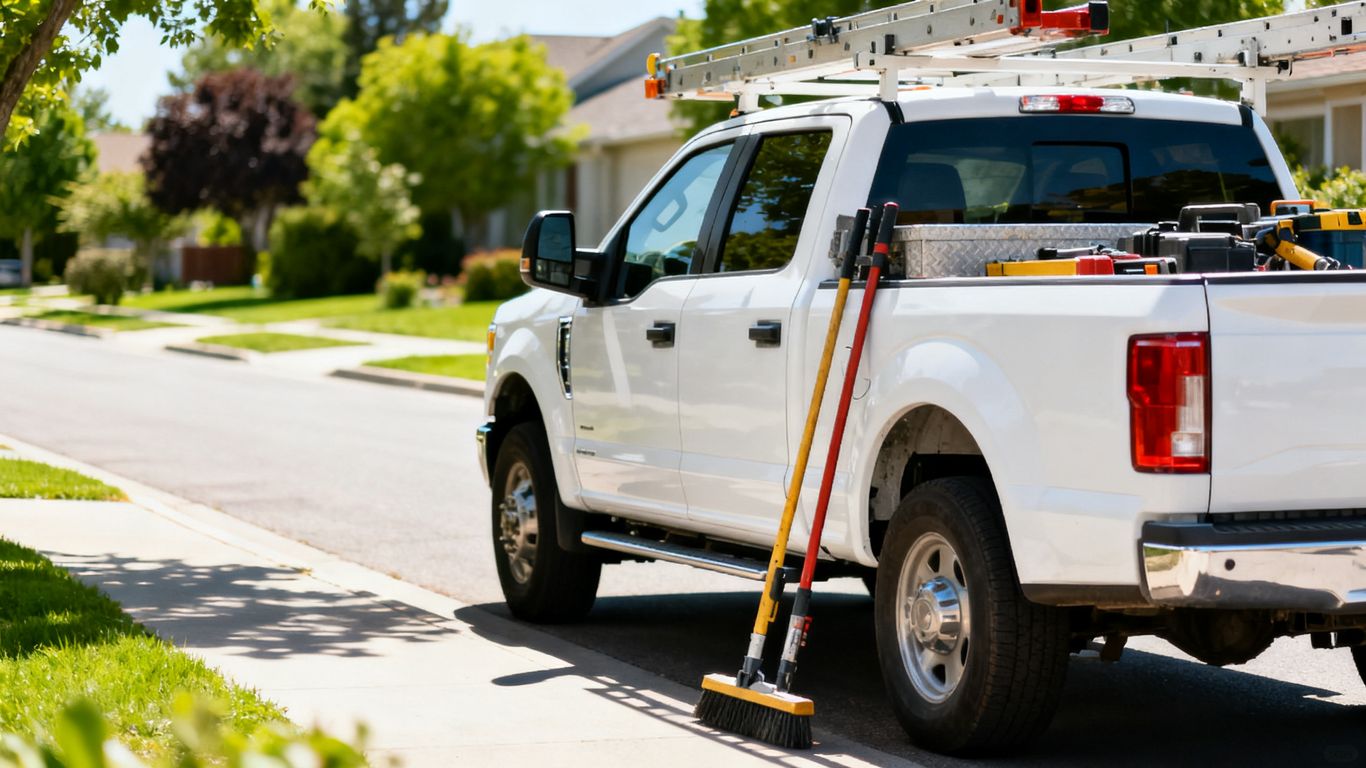
A yard sign at a job site does the same work as a small local ad, except it runs for free while your crew is on the ladder. Neighbors walking the dog see it, ask about it, and remember it when their own kitchen finally gives out. A clean, branded truck parked in the driveway does the same thing every time you pull up. Neither costs you anything you weren’t already spending, and both put your name in front of exactly the homeowners you want to reach.
Running simple, location-based ad campaigns
Localized ads reach people who are actually inside your service area. Cast too wide a net and you’ll pay for clicks from homeowners outside your range who were never going to book. Here’s how the main channels compare:
| Marketing Channel | Effort Level | Expected Accuracy | Primary Benefit |
|---|---|---|---|
| Local Map Ads | Low | High | Map Pack Exposure |
| Social Media Ads | Medium | Medium | Brand Awareness |
| Third-Party Leads | Low | Low | Quick Volume |
Stick with the high-accuracy channels, like map ads, and your spend goes toward homeowners who are actually close to picking someone for the kitchen or bath job.
3. Turning leads into signed contracts
Following up before the lead goes cold
Speed is the biggest edge a small operator has over the big firms. A remodel is expensive enough that most homeowners call two or three contractors before they decide, and whoever gets back to them first usually gets the first estimate slot, and often sets the price the others get compared against. Wait a few hours to return a call and you’re probably losing that homeowner to whoever answered first. That’s why handling your missed calls with a 60-second text-back system is worth setting up. Think of the math: at $400/call x 3/day, every call that goes to voicemail without a fast response is money you already paid for and didn’t collect.
Using clear estimates to build trust
Your estimates should be easy to read and itemized so the homeowner feels comfortable signing off on the work. Vague or messy pricing tells them the job itself might be messy. Lay the project out clearly and saying yes becomes a simple decision instead of a leap of faith.
Scheduling site visits effectively
Once a lead has momentum, book the site visit while their interest is high. A system that lets them pick a time on your calendar beats the back-and-forth emails that kill enthusiasm before you ever meet. Show up on time, dressed cleanly, and ready to talk through the project, and you’re already ahead of most of the contractors they’re considering.
- Confirm the visit 24 hours prior by text to cut down on no-shows.
- Bring a branded checklist of your materials and process.
- Explain your warranty and craftsmanship guarantees clearly.
- Take notes on the client’s specific concerns during the walk.
These small steps mean you walk out with the details you need for an accurate estimate, and you look like you’ve done this before.
4. Building a reputation that sells itself

Asking customers for photos of finished projects
Once the final payment clears, ask for photos of the finished space. Most homeowners are happy to show it off, and those real shots are your best proof of quality. Skip the stock imagery. Homeowners shopping for a remodeler can spot a stock photo instantly, and it undoes more trust than it builds.
Using social media to prove your work
You don’t need a content strategy for this. Post the before-and-after photos from your last job to Facebook and Instagram, tag the neighborhood if you can, and let the work speak. Homeowners scrolling their feed see what a gutted kitchen actually looked like on day one and what it looks like now, from a contractor working in their own area. That’s a stronger pitch than any ad copy.
Using your phone to film your work
You don’t need a video crew either. A short, unedited walkthrough shot on your phone, you pointing out the tile work or the new cabinet layout, builds more trust than a photo gallery because homeowners can see the quality and hear you talk about the job in your own words. Post it the same place you post the photos.
Showcasing specific craftsmanship in your portfolio
Don’t just show a finished room. Show the details that prove you did it right: close-ups of trim work, tile alignment, or a clean electrical transition. Those shots speak for themselves and tend to attract the customers who care more about quality than about finding the lowest bid.
Handling negative feedback professionally
Even the best contractor eventually hits a bad review. How you respond defines your brand more than the review itself. Respond quickly, own the issue if it’s real, and explain what you did or will do to fix it. A calm, professional reply to a bad review tells the next homeowner reading it that you stand behind your work even when something goes wrong.
5. Tracking what is actually working
Identifying where your best jobs come from
Stop guessing which marketing is paying for your fuel and materials. Know which calls came from organic search, from the map listing, or from a referral. If you’re not tracking the source of every call, you could be spending money on a channel that isn’t sending you anyone.
Dropping marketing channels that cost too much
It’s easy to stay locked into an agency relationship that isn’t delivering, just because switching feels like more work. Review your leads regularly and check whether the cost of a channel actually lines up with the revenue of the jobs it brings in. If a channel hasn’t paid for itself in a few months, cut it.
Knowing when to increase your budget
Once you find a channel that’s actually bringing in good projects, put more money behind it. Scaling is simple when you have the data to show it’s profitable per job. Don’t increase spend just because someone tells you that you need more exposure. Increase it because the numbers already prove it works.
6. Avoiding common marketing mistakes
Buying lead lists that nobody answers
Buying a list of names is usually a waste of money, especially when those homeowners never asked to hear from you. Response rates are bad, and you end up sounding like a cold call. Put your effort into marketing that makes people call you first.
Relying only on third-party marketplace apps
Build your business entirely on someone else’s platform and you’re exposed the day they change their algorithm or raise their fees. Keep a home base you actually own, your own website and your own Google profile, so your business isn’t standing on someone else’s ground.
Overcomplicating your message to homeowners
Homeowners want to know you’re reliable, on time, and good at your trade. They don’t need to hear about your internal process or industry jargon. Keep the pitch plain, the way you’d talk to a neighbor who just wants their basement finished or their ceiling fixed.
Conclusion
A remodeling business runs on trust and speed more than on ad spend. Your Google footprint gets you found. Answering fast gets you the first estimate slot. Real photos and a quick video from the last job do the convincing while you’re still driving to the next one. Track where your booked jobs actually came from, keep the channels that pay for themselves, and let the work you’ve already finished do the selling for the work you haven’t booked yet.
Frequently asked questions
Why do my search rankings change every week?
Algorithm updates and moves your local competitors make can shift your ranking week to week. Keeping your name, address, and phone number consistent everywhere, and staying steady with reviews, helps settle your position over time.
How often should I ask for client reviews?
Ask as soon as the project is done and the client is clearly happy with it. Wait too long and they’ll have forgotten the specific things that impressed them.
Is it better to focus on social media or search?
For a contractor, search and map traffic tend to carry higher intent, since the person searching is already looking for a solution to a project they have right now. Social media is better for showing off your portfolio. Search is usually where the bookings happen.
How do I know if I am in the top 3 on maps?
Search for your main remodeling service plus your city from a private or incognito browser window. If you show up in the map pack, you’re doing well locally.
What should I put on my contractor website?
Your service area, a gallery of recent finished jobs, and simple, obvious ways to contact you. The site should answer one question: can this person handle the specific work I need done.
How do I handle a fake review on my profile?
Flag it through the platform’s standard reporting process. Provide evidence that the reviewer was never a client, and explain clearly why the review is fraudulent.
How do I handle a negative review that’s unfair but not fake?
Respond calmly and don’t argue in public. Acknowledge what happened, explain what you did or will do to fix it, and leave it there. Homeowners reading your reviews later tend to judge you more on how you handled the complaint than on the complaint itself. Never offer a discount or incentive in exchange for changing or removing a review.
What percentage of my revenue should I spend on marketing?
There’s no single number that fits every shop, and anyone who gives you one without knowing your business is guessing. What matters more than the percentage is whether you can trace each dollar you spend to a booked job. Start small, track results by channel, and only grow the budget for the channels that are already paying for themselves.
Can I market if I have very limited time?
Yes. Focus on keeping your Google Business Profile current and on getting a fast-response system in place for missed calls. Those two things return the most for the least amount of daily effort.
Want to know exactly where your Google Business Profile is losing you calls? Get a free, no-obligation GBP audit.