
Key Takeaways
If you’re searching for reputation management near me, you’ve probably already been burned by an agency once. You don’t need a lecture on reviews, you need a way to tell a real partner from another empty pitch, whether that turns out to be us or somebody else. Use these points to filter out the agencies wasting your time.
- Prioritize agencies with proven results in your specific trades industry.
- Avoid any company guaranteeing search result removal or top rankings.
- Look for transparent monthly billing instead of a contract you can’t get out of.
- Judge the work by whether it drives calls and jobs, not by a report full of numbers you can’t use.
- Verify references by calling their past trade clients yourself.
Checking an agency’s track record
When you start calling reputation firms, look past the pitch. If they call themselves experts, they should be able to walk you through exactly how they’ve handled real problems for other service businesses. Ask direct questions and pay attention to how they answer them.
Verifying their own Google Business Profile
Check how the agency presents itself online before you trust them with your listing. If a company can’t keep its own Google Business Profile active and current, it probably won’t keep up with yours either. Look at how they respond to their own bad reviews. That response style is what you’ll get on your account.
Asking for proof of work with similar businesses
Residential work isn’t the same as commercial work, and the same is true for reputation management. Ask for proof they’ve handled a business like yours, not just any business. If they hand you a case study, check that the numbers are specific and that the timeline matches how this kind of work actually plays out, over months, not days. If they can’t name a real client or point you to someone who’ll vouch for them, that tells you something too.
Avoiding companies that promise guaranteed results
Be skeptical of anyone who says they can delete bad reviews or guarantee a set number of new bookings by next week. Search results shift constantly and no one controls them completely, so a firm making big promises is usually hiding something. Stick with partners who talk about steady, real work instead of shortcuts.
What our reputation system actually covers
Reputation work covers a handful of ongoing jobs that keep your business visible when someone searches for help nearby. Good work builds a system that keeps pulling in new reviews and steady calls, rather than a scramble to clean up whatever showed up this week. That’s what we mean by an operating system for your reputation: review generation, review responses, your listing data, and your Google Business Profile working together instead of getting patched one at a time.
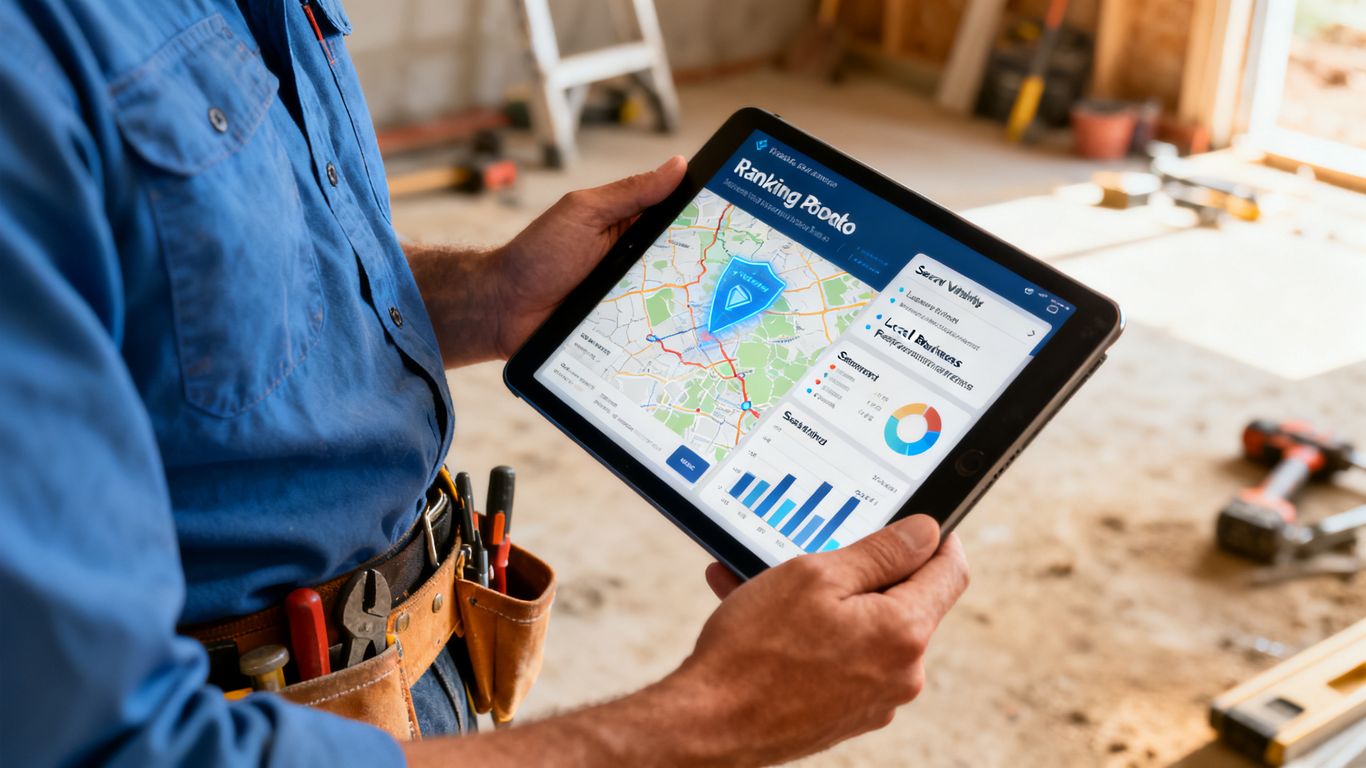
Google Business Profile optimization
Your profile is the foundation for getting found by customers who need help right now. Our Local SEO & Google Maps work moves you from outside the top 10 to the top 3 on Google Maps by making sure your profile data is accurate and categorized correctly. That’s the piece of infrastructure that gets your phone ringing.
A system for responding to negative reviews
Negative feedback happens. What matters is whether you have a standard way to acknowledge it, explain your side when that’s warranted, and steer the conversation toward a resolution instead of a public argument. A good partner helps you build that into your weekly routine, not just react whenever you happen to notice a new review.
Getting new reviews without it feeling like spam
The easiest way to get new reviews is to ask right after a job closes, while the customer is still happy with the work. Automated requests can do this well if they’re timed right and don’t read like a mass blast. Done right, every closed job becomes one more piece of proof for the next customer deciding whether to call you.
Keeping your listings accurate on Google, Yelp and Facebook
An old address, a wrong phone number, or a misspelled business name on a directory site can cost you a job before the customer ever calls. This matters most on the platforms your customers actually check: your Google Business Profile, Yelp, and Facebook. A partner doing this work should be sweeping all three, not just whichever one is easiest to manage.
Red flags when vetting local firms
Not every agency is built to help a small operator succeed, and some are counting on your frustration to close a shaky deal. Spotting the warning signs early saves you money and months of wasted effort.
The promise of overnight search result removal
Anyone who says they can make a bad review disappear overnight isn’t being straight with you. Search engines run on algorithms that don’t respond to pressure or a fee. A legitimate partner pushes negative results down by building up good, current content, not by promising a delete button that doesn’t exist.
Lack of transparency in the contract
If the contract is vague about what you’re paying for, or it auto-renews into another year without a clear way out, walk away before you sign. You want a plain agreement that spells out exactly what’s covered each month and how you can stop the service if it’s not working. A company that earns your business every month through results doesn’t need to lock you in.
Reliance on automated or spammy outreach
Be careful if an agency wants to blast your customers with generic review requests or posts that don’t sound like anyone actually wrote them. Automation should feel like it came from your business, not from a template swapped in for every client. Sloppy automation does more damage to your name than good.
Refusal to provide local references for contact
If a company can’t give you a few names of clients in your trade who’ll talk about their experience, that’s a real red flag. A quick call to a reference tells you more than any pitch deck: whether the day-to-day work was actually good, and whether the phone started ringing like they said it would. A firm with nothing to hide will connect you directly.
Costs and timelines for reputation work
Budget for reputation work the way you’d budget for a new van or a new tool: as an ongoing cost, not a one-time purchase. What matters is whether the cost structure matches the effort it actually takes to move your local ranking.

Hourly rates versus monthly retainers
Most credible agencies work on a monthly retainer, because this work needs consistency over time rather than a single burst of effort. Comparing fee structures side by side helps you see what you’re actually getting for your money.
| Payment Type | Frequency | Typical Goal | Focus Level |
|---|---|---|---|
| Project Fee | One-time | Quick Audit | Low |
| Hourly Rate | As needed | Emergency Triage | Medium |
| Monthly Retainer | Recurring | Steady Growth | High |
This kind of breakdown shows you what you’re paying for: results, not hours spent in meetings that don’t change how customers find you.
A realistic timeline for fixing search issues
Fixing a damaged profile usually takes months, not weeks. You’re building a track record that has to show up repeatedly before an algorithm trusts it. Expect a stretch of data gathering and setup before you see real movement in the map pack. Switching agencies too early, before the work has had time to show up, is one of the most common ways operators end up paying twice.
Where your budget should actually go
Most of your spend should go toward getting new reviews, responding to them, and keeping your profiles accurate. If a big chunk of the bill is going to vague “reporting” or admin hours, you’re being overcharged. The work that matters is the work that changes what a customer sees when they search for you.
Scaling with your business size
Start with the basics and add on as more jobs come in. You don’t need an enterprise package if you’re running a small crew and a handful of service areas. As the calls pick up, you can expand your reach and add more of this work.
Why understanding your trade matters more than your vendor’s zip code
The work itself happens on the internet no matter where the agency’s office sits. What actually matters is whether the person running your account understands your trade, not whether they’re a short drive away.
Someone who has actually run a service business
The team behind this system spent 19 years in a technical trade business and 5 years running a solar installation company. That means answering the phone, quoting jobs, and getting through a slow month firsthand, not just reading about it in a report. That background is why this advice is built around getting your phone to ring, not around numbers that only look good in a slide deck.
Speaking the language of your trade
A partner who understands your trade writes review responses and outreach that sound like they came from someone who’s actually done the work, not a generic template swapped in for every industry. A customer reading it can usually tell the difference.
Being reachable without a ticket queue
When something needs a real conversation instead of a support ticket, you want to reach a person on the phone quickly. That depends on how the partner set up their business, not on whether they share your zip code.
Shared stake in the outcome
A partner who has run a service business themselves knows what a quiet week feels like. That’s a stronger accountability check than any generic monthly report. The result that matters to them is the same one that matters to you: whether the phone rings.
DIY steps to take before you hire
Before you pay anyone, tighten up what you can control yourself. Knowing your own numbers gives you more leverage when you sit down with a partner, and it stops you from paying someone to fix things you could handle in an afternoon.
Setting up alerts for new reviews and mentions
Don’t wait for a customer to mention a review to you. Set up notifications so you see every new mention of your business name as it happens, and you can respond right away.
Auditing your own digital footprint
Open a private browser window and search your business name plus your town. Look at what comes up with fresh eyes. Check whether your social pages have old photos, or whether your website loads slowly on a phone. Doing this yourself first means you’re not paying an agency to fix things you could have updated on your own.
Creating a standard response workflow for your staff
Your office staff should know how to answer a negative review without waiting on you to dictate every word. Write a few templates for common issues like scheduling delays or pricing questions and keep them in a shared doc.
Taking inventory of your worst-performing channels
Figure out which platforms are actually bringing in jobs and which ones are just taking up your time. If you’ve kept up a page that never generates a lead, stop putting effort there and put it where your customers are actually searching.
Conclusion
Managing your online reputation doesn’t require a local office, but it does require someone who understands your trade and focuses on the one thing that matters: whether the phone rings. Use the checklist above on every agency you talk to, including us. If we can’t answer these questions straight, don’t hire us either.
Frequently Asked Questions
Should I prioritize a company in my own city?
Location matters less than expertise. The platforms you’re competing on operate across the whole internet no matter where the agency’s office is. Focus on their track record and how they communicate, not their mailing address.
How long does reputation repair normally take?
Most efforts show results after several months of consistent work, because you’re building a track record that takes time to add up. Look for steady, gradual improvement each month rather than expecting an overnight fix.
What does a legitimate agency contract look like?
Look for a short, clear document that lists your monthly fee and a simple way to cancel without a penalty. A transparent contract has no long-term lock-in, because a good agency earns its spot on your team every month through the work it does.
Can I handle some reputation work myself?
Yes. You can set up monitoring alerts, fix basic listing errors, and write templates for responding to common reviews on your own. Doing the basics yourself gives you a clearer sense of what you actually need to hand off.
What do I do when I see a fake review?
Flag it through the platform’s own reporting tools and explain clearly why it violates their guidelines. Keep documentation, like job logs showing the reviewer was never a customer, to back up your claim.
What if I don’t have any bad reviews yet?
You still need this. A steady flow of new reviews keeps you ahead of competitors who are already managing theirs, and it means one bad review or a slow month can’t do much damage later. Waiting until you have a problem to fix means you’re always playing catch-up.
Why does responding to reviews help me get found?
Responding to reviews shows the platform your business is active and engaged, which tends to help your standing in local search results over time. It also shows the next customer reading your page that you actually care about the work.
How do I know if this is actually working?
Track the things that actually matter to your business: the number of new positive reviews, your average rating over time, and whether more calls are coming in. Those are a better read on progress than a report full of numbers you can’t act on.
Want to know exactly where your Google Business Profile is losing you calls? Get a free, no-obligation GBP audit.